
Restorative Care
Root Canals Aren’t What They Used to Be.
If a tooth is throbbing, cracked, or has a deep cavity, a root canal is often the calmest way to save it. Modern techniques and anesthesia have made the procedure a lot less dramatic than its reputation. Our doctors do them right here in the office.
A root canal treats the pulp inside a tooth, the soft center with the nerve. When decay reaches the pulp, or a tooth cracks deep enough, or an old filling gives out, the pulp becomes inflamed or infected. That’s the pain.
We open the tooth, gently clean out the inflamed tissue, disinfect the space, and seal it up. In most cases we finish with a crown to protect the tooth going forward. The tooth stays. You keep chewing on it. The pain goes away.
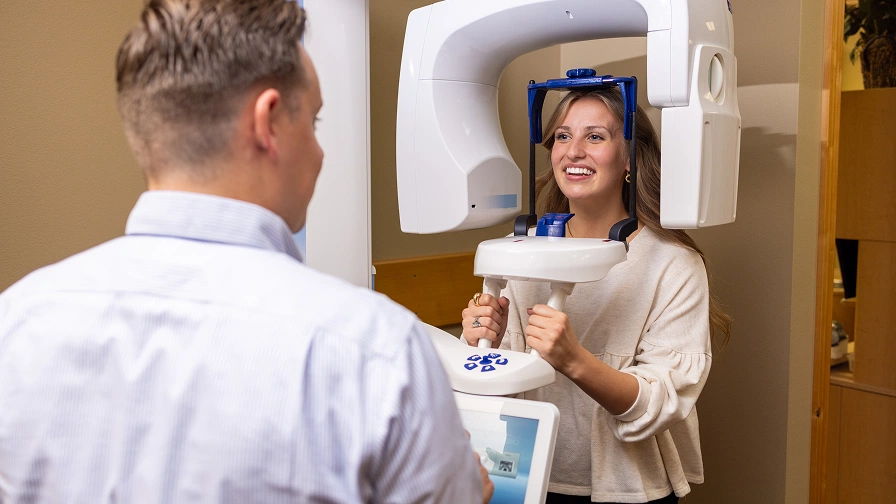
What Root Canal Treatment Actually Involves
Root canal treatment usually takes 60 to 90 minutes for a single-canal tooth. Multi-canal teeth (like molars) can take a little longer or occasionally get scheduled across two visits. The appointment itself has six steps: check the tooth, get you numb, isolate the tooth with a small rubber shield, clean out the pulp, disinfect and seal, and place a temporary or start a crown.
Most patients tell us the procedure was much easier than they expected. The toothache that brought you in is gone almost immediately. Some soreness for a day or two afterward is normal and handled by over-the-counter pain relievers.
Why We Handle Root Canals In-House at Mapleton Family Dentistry
Most root canal cases we handle right here at Mapleton Family Dentistry. You don’t have to be referred to an endodontist for standard treatment. Same office, same team, same familiar chairs. Both Dr. Griffiths and Dr. Thueson perform them.
When a toothache flares up, waiting a week is not an option. With two doctors on staff, we can usually get you in fast, often same-day. If a case does need an endodontist, we’ll coordinate the referral and stay involved.
Comfort is the priority. Modern anesthesia. Careful pacing. Breaks when you need them. If you’re anxious, tell us and we adjust. This is a routine procedure for us, but we know it isn’t routine for you.
How a Root Canal Visit Actually Works
The mystery is often scarier than the reality. Here’s exactly how a root canal appointment goes at Mapleton.
We Check the Tooth
Digital X-ray, gentle exam, quick conversation about what you’re feeling.
You Get Numb
Local anesthesia around the tooth. We check with you before we start.
We Clean Out the Pulp
Small instruments remove the inflamed tissue. This is the part that ends the pain.
We Disinfect and Seal
The inside of the tooth is rinsed and filled to protect against future infection.
We Place a Crown
Most root-canaled teeth get a crown for long-term protection.
Root Canal Frequently Asked Questions
It should not. Modern local anesthesia is very effective, and we check with you before we start to make sure the area is fully numb. If you feel anything sharp during treatment, we stop and add more anesthetic. Most patients tell us the procedure was much easier than they expected, and dramatically more comfortable than the toothache they had before.
Most single-canal root canals take about 60 to 90 minutes from start to finish. Molars with multiple canals can take a little longer or occasionally be scheduled across two visits.
Usually yes. A root canal removes the pulp from inside the tooth, which makes the tooth more brittle over time. A crown protects it and lets you chew normally for years to come. Sometimes we can start the crown the same day; sometimes we schedule a short follow-up.
Most PPO plans cover a portion of root canal treatment and the crown that follows. We work with most PPO plans and will review your specific coverage with you before treatment starts so there are no surprises.
The infection does not go away on its own. It usually gets worse, which can mean losing the tooth, a spreading infection, and often significantly more expense down the road (an implant or bridge costs more than a root canal and a crown combined). A root canal is usually the calmer, cheaper path.
400+ five-star Google reviews
What patients say
Real Google reviews from our patients, in their own words.
“Dr Griffiths constantly checks the patients comfort during procedures. For the first time I don’t fear going to the dentist.”
“I went in for help with some tooth pain and to get a direction on how to proceed with some fairly complicated dental work. The staff was amazing, very welcoming, non judgemental, always made sure I was comfortable and understood everything.”
“I had an emergency and they got me right in even though I was a new patient. Super impressed with their efficiency and the quality of their work.”
Questions about insurance or cost?
Bring your insurance card to your visit. We’ll help you understand your benefits and go over the cost before treatment starts.
Explore other care
Not sure this is the right page? Browse our other services or call and ask.
If a tooth is hurting, don’t wait.
The sooner we look at it, the more options we usually have. Call us and we’ll get you in.
Have a question first?
We’re here when you’re ready.